Showing posts with label Joan Lennon. Show all posts

In Which I Enjoy a New Word by Joan Lennon

And the word is ...
pareidolia

This may be a term you use on a daily basis, but it was completely new to me.  It refers to that peculiar habit of the human brain to see faces, patterns, or meaning where they do not really exist.  Like the man in the moon, or a dragon in a cloud, or Madeline's "crack on the ceiling that had the habit of sometimes looking like a rabbit."  I came across it by a roundabout route.  It happened like this ...

A friend introduced me to The Public Domain Review - like the National Library of Scotland chapbook archive I warned you about, these are dangerous waters.  Almost immediately, I was sucked in by an article on anthropomorphic landscapes.


Athanasius Kircher (1645-6)


Flemish School (early 17th century)


Herman Saftleven the Younger (1650)

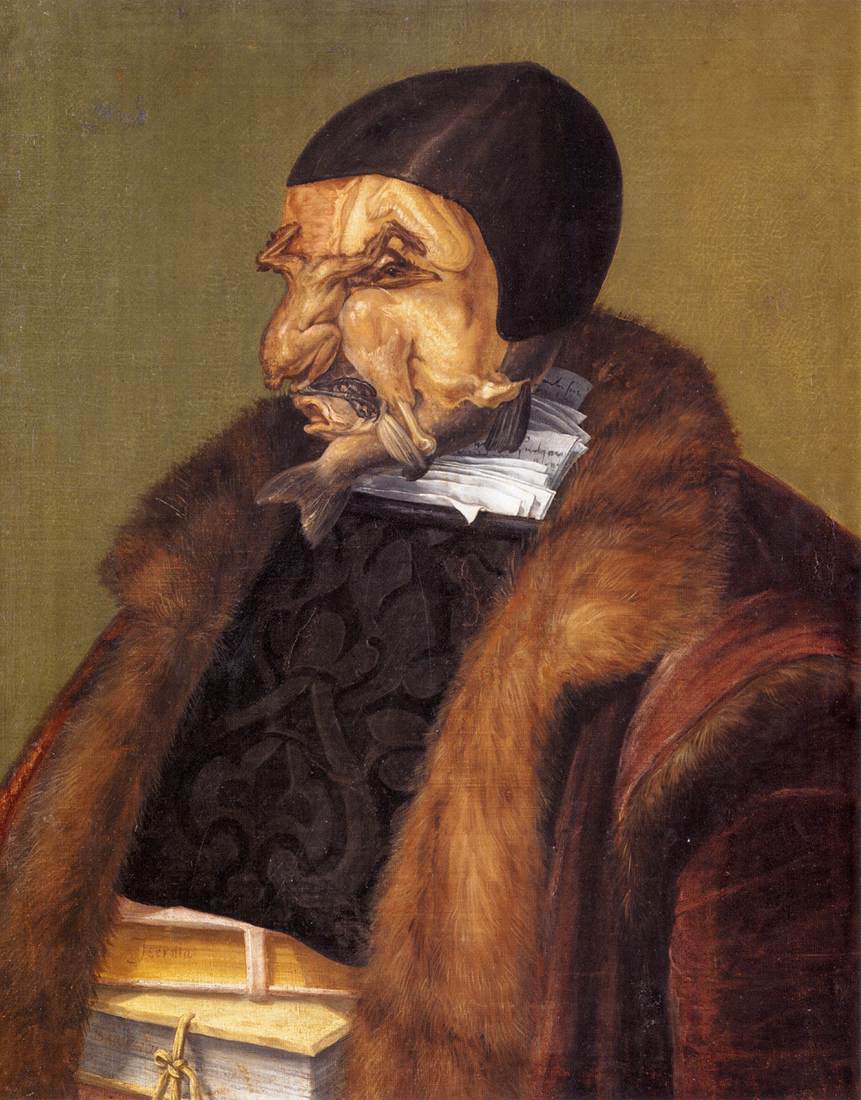
Which made me think of what Juan Sanchez Cotan did with vegetables at the beginning of the 17th century (I've raved about him here) which made me half-remember paintings of people made out of plants, so I wandered off in search of "17th century portraits of people made out of vegetables" and came to Guiseppe Arcimboldo, who turns the finding a face where one shouldn't really exist into finding vegetables/fish/books where they shouldn't really exist.  He fascinated his contemporaries with these insane portraits, and he fascinates us still.  (Interestingly he started out working with stained glass - I think you can see the influence of building with units.)


Summer (1653)


The Jurist (1566)

I also love the amazingly modern-looking Librarian which you can see here (I couldn't get a jpg image to copy over).

And it was while I was hanging out with Arcimboldo and vegetable paintings generally that I stumbled across my new word.  And did I then call a halt?  Did I completely refrain from checking out modern pareidolic images and the various humorous things one can do with a set of stick-on googly eyes?  Of course I did.  I am, after all, a History Girl. 

Do you have a favourite (historical, of course) pareidolic image, anthropomorphic landscape or portrait made out of vegetables?  If so, share a link to it in the Comments, and let the wandering continue.  And here's to new words and the delightful strangeness of the human mind!  


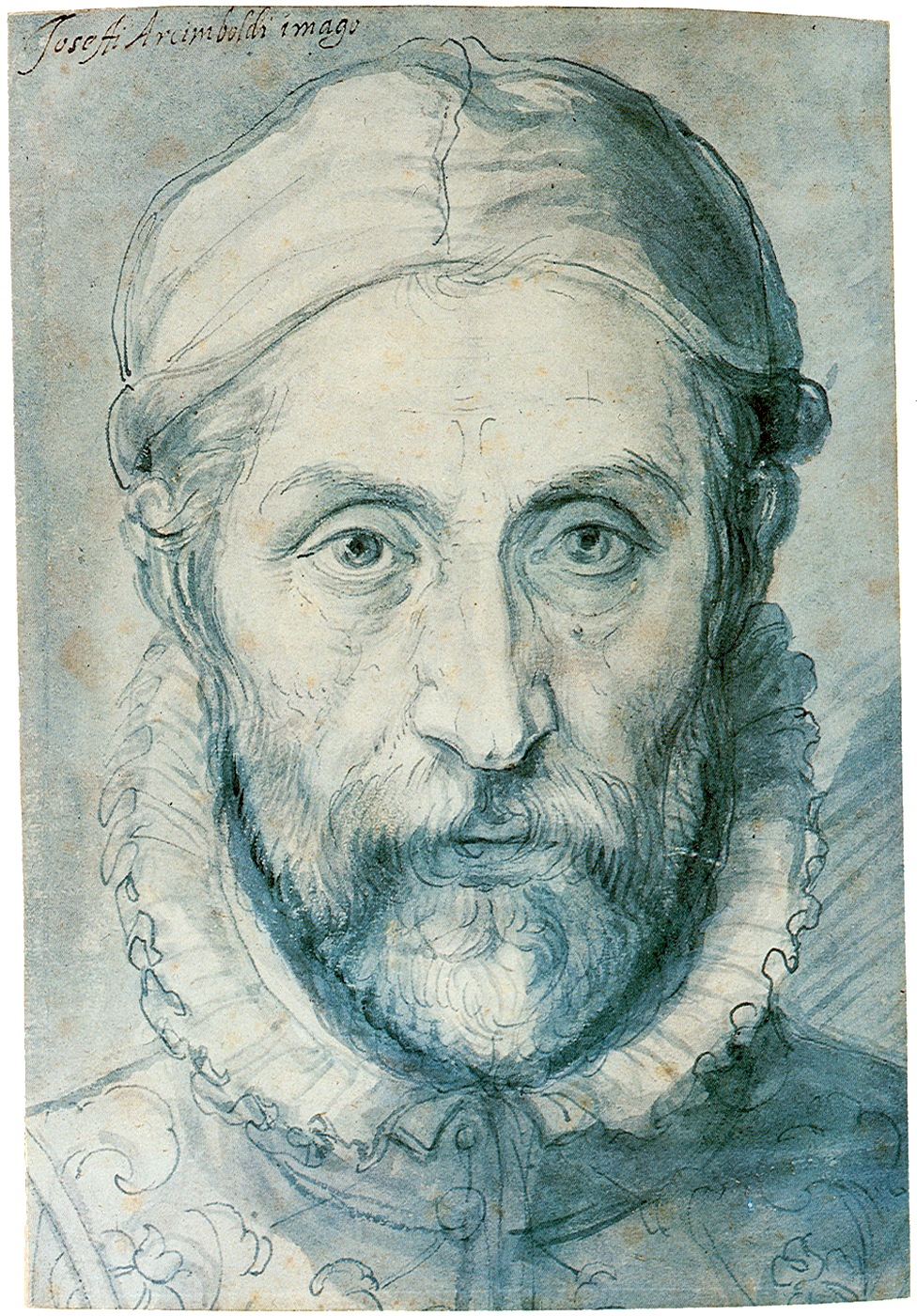
P.S.  This has nothing to do with anything pareidolic, but if this self-portrait is anything to go on, wasn't Guiseppe gorgeous!


Joan Lennon's website.
Joan Lennon's blog.
Silver Skin.
Streets of Belfast 1901: An Animated Photo - Joan Lennon

My sister flagged up this video to me, because our grandfather came to Canada from Donaghadee (a small place not far from Belfast) about 10 years after this scene was filmed.  I looked out for him in case he was in Belfast that day (he had a pronounced limp because one leg was substantially shorter than the other, from a badly set break as a boy, so he would have been spot-able) but no luck.

This was filmed from the top of a horse-drawn tram by Sagar Mitchell and James Kenyon, on a fine sunny day in May, 1901.  The end product, an "animated photo"*, was shown in the Usher Hall, Belfast and you can see perambulating billboards advertising the performance at 1:28 and 2:20.


It's riveting, isn't it?  The casual way people stroll into the street - the weight and swish of the women's skirts - I feel as if I've learned a lot, seeing the clothes in motion, instead of just in static drawings or still photographs - the different lengths of skirts for different ages - those enormous hats on those little girls!

I keep seeing more each time I watch it - 
at 0:07 - the barefoot boy 
at 1:10 - the extremely pregnant woman carrying a baby and holding the hand of a bouncy little girl in white and a big hat -
at 1:31 and 1:36 and 1:41 - the way women with more of a bustle would grab the back of their skirts with one hand
at 2:55 - the little boy in his sailor suit, standing out in the street
at 3:05 - the country woman in a shawl and apron 

I can't help noticing the sad condition of some of the animals, then, right at the end, two perky dogs trot by.  Our grandfather loved dogs.  He would have approved.


*"Film" and "movie" hadn't yet consolidated their places as the accepted terms for moving pictures.


Joan Lennon's website.
Joan Lennon's blog.
Silver Skin.

An Addictive Resource - Joan Lennon

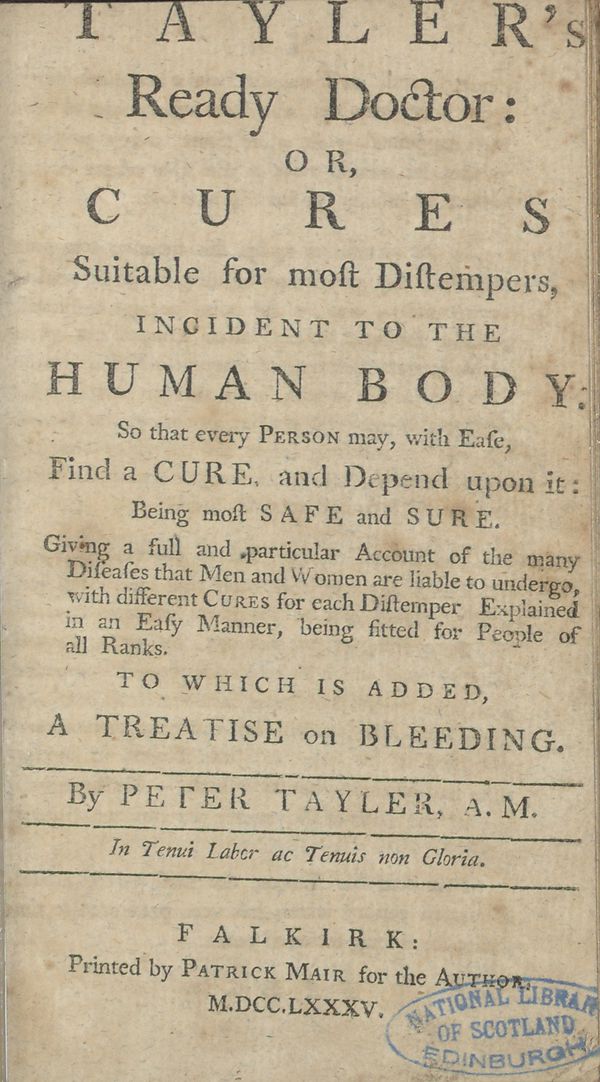
All I wanted to do was have a quick look at the National Library of Scotland's online resource of Chapbooks Printed in Scotland, just to see if I thought it would be of interest to History Girl readers.  And it is.  Fascinating historical chapbooks, printed in the 18th and 19th centuries, in 42 categories (from Accidents and Apparitions to War and Wit and Humour) are reproduced page for page.  But then I made a terrible mistake - I clicked on Diseases, and then on Tayler's Ready Doctor (published 1776) - and time passed ...


For a Greedy Appetite
Pottage of Wheat and a little Whale Oil boiled therewith; repeat this once a day for three days; or, apply Gum Arabic to the Belly.  If none of these will cure, the Patient's Case must be desperate indeed.

For Beardiness
... if you want to be free of a Beard altogether, the Blood of a Batt, once applied, will do the turn.

For Grief
Drink heartily of Balm and Mint Juice ...

For the Hickup
... Stop both your fingers in your ears, until you count to Fifty and Five regularly ...

Do you have an addictive nature?  Then perhaps you had better stay away from this site.  Think you're hard core enough to handle it?  Good luck and see you later.  Much, much later ...


Joan Lennon's website.
Joan Lennon's blog.
Silver Skin.

Getting Dressed as a Victorian Lady - Joan Lennon


If you don't have a lot of experience of historical re-enactment, you might consider this video on the process of dressing in the Victorian age - I know I learned a lot!  For example, the shoes before corset rule would never have occurred to me.  Also, there's the efficacy of the bunny hop.  And if you fancied another video, you might want to have a look at How Did They Go to the Toilet? - the facing backwards ploy shows yet again the ingenuity of the Victorians.

Enjoy!


Joan Lennon's website.
Joan Lennon's blog.
Silver Skin.

26 Pairs of Eyes by Joan Lennon

Back in February I posted about My Foundling Girl - the object I'd been assigned as part of 26 Pairs of Eyes: Looking at the Overlooked.  This project was a collaboration between the writers' collective 26 and The Foundling Museum in London.  The curators chose 26 objects which were then assigned at random to 26 writers for their response.  The resulting exhibition runs all summer.*  If you possibly can, go and visit - the museum is fascinating - humbling, heartbreaking and hopeful in equal measures - and the sestudes (62 word pieces - 62 being 26 backwards) offer new insights into the chosen artefacts.


If you can't visit, though, there's an online alternative here, where you can browse through the objects the curators chose, the authors' responses and background pieces on the process as well.  


My object was a marble bust called "The Foundling Girl" made by David Watson Stevenson in 1871 - 


and my response to her is here.  Is she my favourite object in the whole museum?  Absolutely. 


* The exhibition runs from 4 June to 6 September 2015 at The Foundling Museum, 40 Brunswick Square, London.


Joan Lennon's website.
Joan Lennon's blog.

A Word I Don't Have by Joan Lennon

English is a rich and wonderful resource, but it has gaps that other languages have managed to fill.  Words for things we feel but haven't a term for.  Like akihi in Hawaiian, which means that thing where you listen to a string of directions, walk away, and promptly forget the lot.  Or arigata-meiwaku in Japanese, for that feeling of having to be grateful for something someone has done for you that you really didn't want them to do in the first place.  Or l'esprit de l'escalier in French, for that clever repartee that comes to you when it's too late to deliver it. 

The word I don't have is maybe a bit specialized, but if it existed it would express something that writers of historical fiction - and non-fiction - feel.  Deeply.  Viscerally, even. 

It's a word to describe that stomach-tightening, hand-dampening, shallow-breath-inducing feeling that we are overwhelmed by when a new programme comes on TV, or a new article appears on the internet, or a new tome is published, on the topic of the book we've just written.  The book where the plot is dependent on a particular understanding of historical events - where the characters have formed themselves around and out of that understanding. The book we've put time and effort and thought and care and tons of research into, and now it's too late to make any changes.

That.

I suspect that out there, in some language or other, there may very well be a term - a word that says, "please, please - I want to go on learning - just don't tell me anything that will blow my book out of the water * - please, please, please ..."   If you know the feeling, let me know.  If you know a term or phrase that English, the great word-grabber, can acquire from some other language, to express this particular discomfort, let me know that too! 


Joan Lennon's YA debut novel Silver Skin is being published by BC, Birlinn Polygon's new imprint, on 16 June 2015.  She continues to watch, listen, read and learn about the late Stone Age but, metaphorically, from behind the sofa.  


* So far, it hasn't happened.  At the end of Silver Skin, I included this Note to Readers:
So much of what we think we know about the time when the Stone Age was bleeding into the Bronze Age is based on bewildering artefacts and guesswork.  What we do know, however, is that during this time, the climate worsened.  There are many scientific, anthropological, archaeological theories about the effect climate change might have had on the civilisation of Orkney, and I have cherry-picked indiscriminately among them.  This story is just that – a story.  It is driven by the interactions of fictional characters in a setting that has sparked my own imagination for years.  I have researched and visited museums and sites and taken photographs and talked and listened, but if you are looking in the result for a historical document, you will be disappointed.
Maybe I should have put it at the front!

Joan Lennon's website.
Joan Lennon's blog.

Still Life - Joan Lennon

BBC 4 documentaries - I love them.  Even the ones where the voice-over narrator repeats what the expert has just finished saying, only less well.  Even the ones where they get the background music totally wrong.  Even the ones where they disappear from iplayer just after I've discovered them, but before I can show them to anybody else.

Luckily, I found this - Apples, Pears and Paint - on youtube here - so I was able to watch again, recommend it to you, and write about it here.  

I've seen still life paintings before - everybody has - but I just hadn't paid attention to them.  While watching the programme, I learned that still lifes (somehow "still lives" doesn't seem right) are most frequently lit from the left.  That elements of the pictures often overlap the edge of the table, as if just about to topple.  I learned that the vanitas element was there in the bugs and the blemishes, not just in the skulls.  I learned that musical instruments in a still life were there because they, too, were emblems of mortality and transience - before the invention of recording, a sound only lasted as long as a bow or a breath and then it died. The story behind the 17th century Dutch still life industry was fascinating.  

And then, the programme turned to the paintings of Juan Sanchez Cotan, of whom I had never heard, and I was blown away.


Still Life with Quince, Cabbage, Melon and Cucumber (1602)


Still Life with Thistle and Carrots (about the same time)

So stark.  So incredibly modern.  That bare stone frame and the blank black background and the harsh lighting (from the left).  It wasn't uncommon to suspend fruit and veg from strings to keep them from rotting at the points where they touched each other, but that swoop from top left to bottom right has nothing to do with storage techniques and everything to do with the way the eye moves.  Or top right to bottom left and back again, from blackened carrots to alien thistle.

Wow.

I have a whole new favourite artist in my life - and a new genre - and that would have plenty, but then the programme gave me one last fillip.  It introduced me to Ori Gersht.  Here is his response to Cotan ...


 Pomegranate (2006)


Two other Gersht works I really like can be seen here, and here - see what you think.

And thank you, BBC4.


Joan Lennon's website.
Joan Lennon's blog.

Orkney: A Historical Guide by Caroline Wickham-Jones - reviewed by Joan Lennon

This is not the first occasion I've indulged my delight in guide books and Orkney (see The Elevated Limpet) but this time I've brought things right up-to-date.


Caroline Wickham-Jones is an experienced archaeologist who has worked on and written about sites across Scotland and Scandanavia.  Her Orkney: A Historical Guide was first published in 1998 and has been updated and re-issued a number of times since then.  Wickham-Jones' clear writing, expertise and obvious enthusiasm for her subject make her brand-new 2015 Guide a must-read for anyone drawn to this approximately 70-island-strong historical treasure trove.

There is so much to see, and one of the confusing things about visiting Orkney is the way remains from so many different historical periods often sit cheek-by-jowl in the landscape.  Wickham-Jones' Guide is extremely helpful in separating the layers out, starting with a series of maps, which show:

     Neolithic sites
     Bronze Age, Iron Age and Pictish sites
     Norse and Scottish Earls sites
     18th- and 19th-century sites
     20th-century sites

The chapters of the book take the same approach, with an overview for each block of time and then a description of sites of interest - and accessibility.  She also explores the effects of geography on the Orkney Islands' history.  The power of the winds, the fertility of the soil, the lack of trees and the easily splittable sandstone rock - all have their place in the way human life here was shaped and preserved. 

I would thoroughly recommend this Historical Guide for your reading and research pleasure - and I would also thoroughly recommend using it on a visit to Orkney.  Orkney may seem a bit out-of-the-way (though you can't really see the edge of the world from there, as Pytheas of Marseille claimed in 330 BCE).  But for a large part of her 10,000 years of habitation, the sea roads made her nearer to being at the heart of things than the edge.  Granted those roads were treacherous* and, as Wickham-Jones says,

"Rather like a six-lane motorway today, you have to know what you are doing, but the northern seas could lead you directly to your destination and provide varied benefits in the form of sheltered harbours and plentiful supplies."

Reading her book, I defy you not to be convinced that those "plentiful supplies" include history preserved in abundance, to excite the imagination and furnish us with thoughts and ideas, whether as readers, writers or historians. 

* Don't worry - the roads to Orkney are much safer now. 


Caroline Wickham-Jones' Orkney: A Historical Guide
pub. Birlinn Books

pub. date 12 March 2015
ISBN: 9781780272641          


(With a YA novel inspired by Skara Brae coming out mid-June, and therefore at too late a stage to change anything, I approach all archaeological writing on my period with some uneasiness ... I'll be talking more about that another time!)


Joan Lennon's website.
Joan Lennon's blog.


Mrs Humphry, Miss Post and the Last Word on Bananas - Joan Lennon

It is World Book Day today - World Book Week/Fortnight for many writers - as schools and libraries up and down the land get into the spirit of the celebration and invite us to get out of our jammies/big sweaters/baggy jeans/slippers/the house.  And, frequently, onto public transport where we, blinking in the sudden light, meet the wide world in a small space.

Be gentle with us.

(Some of the advice below may appear to come from another world, but many of us live in other worlds a lot of the time, so it seemed appropriate.)


I love Mrs Humphry.  (I've posted before about her Manners for Women and Manners for Men and barely scratched the surface of her awesomeness.)  Listen to her words from the 1897 edition of Manners for Men on omnibus travel -

"True courtesy ... will prevent a man from infringing the rights of his neighbours on either side by occupying more than his own allotted space.  Very stout men are obliged to do so, but at least they need not spread out their knees in a way that is calculated to aggravate the evil.  Nor need they arrange themselves in a comfortable oblique position, with the result of enhancing the inconvenience ... Even a thin man can take up a quantity of room by thus disposing himself at an angle of forty-five ...

The morning paper may be converted into an offensive weapon in the hands of the rude and careless ... Newspapers are rather unwieldy things to turn and twist about in a limited space, but this very circumstance affords a man an opportunity of displaying his skill in manipulating the large, wide sheets without dashing them in the face of his nearest neighbour, or knocking against anybody in a series of awkward movements that a little care could easily convert in leisurely, graceful ones ...

It can never be out of place for a man to give up his seat in favour of the old and infirm, or for a woman with a baby in her arms.  But such matters as these belong to the region of heart and mind beyond mere manners, and it is useless to suggest any line of action on such subjects.  The impulse must come from within."


And, moving from bus to train, and forward a decade or two -


(Miss Emily Post 1912)

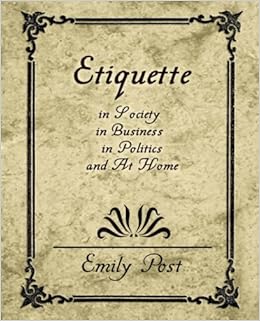
Miss Emily Post's Etiquette in Society, in Business, in Politics, and at Home has been revised and reprinted many times, but I like the 1922 original best.  And out of all her words of advice, I'd like to select these for your consideration as you pack your leather valise -

"On a railroad train you should be careful not to assail the nostrils of fellow passengers with strong odors of any kind. An odor that may seem to you refreshing, may cause others who dislike it and are “poor travelers” to suffer really great distress. There is a combination of banana and the leather smell of a valise containing food, that is to many people an immediate emetic. The smell of a banana or an orange, is in fact to nearly all bad travelers the last straw. In America where there are “diners” on every Pullman train, the food odors are seldom encountered in parlor cars, but in Europe where railroad carriages are small, one fruit enthusiast can make his traveling companions more utterly wretched than perhaps he can imagine." 

Just a thought.


(If you want to browse more in Miss Post's or Mrs Humphry's books and don't have well-thumbed copies on your shelf, you can do so here - and here - but be politely warned - they are incredibly addictive!)


Joan Lennon's website.
Joan Lennon's blog.

Mary Anning in My Mind - Joan Lennon

Mary Anning (1799-1847) was a fossil finder along England's Jurassic Coast, during the earliest days of the new science of paleontology. The theme on History Girls this month is Cranky Ladies in History, and Mary certainly had plenty of reasons to be unhappy, fed-up, angry, obstreperous, or, indeed, eccentric. (Tricky, these transatlantic translations ...) She had money worries, serious health problems, and more than her fair share of griefs, and she was under-valued by a scientific community made up largely of rich guys with beards. There are very few contemporary images of her other than the ones below:

sketch of Mary Anning by Henry De la Beche


painting by B.J. Donne (Mary is meant to be pointing at a fossil, not telling her dog Tray to stay)

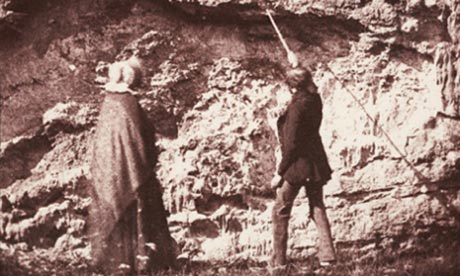
Salt print photograph by William Henry Fox Talbot ("The Geologists" 1843) which may or may not include Mary Anning as the lump on the left (see Suzanne Pilaar Birch's article in the Guardian here.)

But the thing is, none of these images is a bit like the one of her I have in my mind.  I've been crazy for fossils for as long as I can remember, and I've had a soft spot for Mary Anning for about as long.  Which is why, when the chance to write a story about her in the History Girls' anthology Daughters of Time came along, I jumped at it.  I did my research.  I found out things I hadn't known before.  I felt sorry for all her troubles and trials and frustrations.  I was in awe of her (self)learning and meticulous skill in separating her fossils from the surrounding rock and her revolutionary understanding of their meanings.  But still that was not what I saw in my mind.  For me, Mary Anning will always be a figure running along a shingly beach, with a hammer in her hand and a dog at her side and the next amazing discovery waiting for her in the rocks just ahead.  The girl who could see things that other folk couldn't - exciting things - wonderful things ...  So that's how I wrote her.


Mary Anning:  Best After Storms


Joan Lennon's website.
Joan Lennon's blog.


P.S.  Back in 2010, the first Slightly Jones Mystery was published, all about the theft of the astonishing (and sadly fictional) dragonfish fossil from the then-new Natural History Museum in London - and this is the dedication:

Everybody's heard of Florence Nightingale 
and David Livingstone.  These books are dedicated 
to the Victorian heroes and heroines 
who aren't quite so famous!

This one's for 
Mary Anning, Fossil Finder


Prescient, eh?

Vermin and Vellum - Joan Lennon

It's no secret that I find having a sleeping cat near me when writing to be both soothing and inspiring, in equal measure.  When I've read about how, in medieval scriptoria, monks shared their literary space with cats, I've thought, Aw, that's sweet - them and me and our furry muses ... not thinking about any other reasons to keep a cat.  I know the Pangur Ban poem which begins - 

I and Pangur Bán, my cat 
'Tis a like task we are at; 
Hunting mice is his delight,
Hunting words I sit all night.

and still I didn't twig.

It's obvious, of course.  Medieval monks, working away at their beautiful illuminated manuscripts, had enemies other than just Nordic types going a-viking.  They were painstakingly inscribing their letters and images onto lunch.


                                                      (© Corpus Christi College Cambridge, MS 214, fol. 122r)

That manuscript has been thoroughly gnawed and nibbled on.  (Though the mice have shown a certain restraint.  Or is it just a question of generous margins?)  It was, therefore, an excellent idea to have in your scriptorium at least one cat.  Some, perhaps, larger than others ...


                                                                 (image from wikipedia)

(Okay, I know, I know, it's a lion and it's there because St Jerome took a thorn out of his paw - but it's such a lovely picture ...)


But, as anyone who's ever tried to shoo a cat off a keyboard will know, cats and writing do not always go together so peacefully.


(image from National Geographic)

Inky paws skitter across the page - or sometimes something worse ...


                                                        (© Cologne, Historisches Archiv, G.B. quarto, 249, fol. 68r)

Make the image a bit bigger - that's a cat the cheesed-off monk has drawn, not a donkey, and those accusing fingers are pointing at potent, pongy, moggy pee.  It's enough to make a good man curse.

Hic non defectus est, sed cattus minxit desuper nocte quadam. Confundatur pessimus cattus qui minxit super librum istum in nocte Daventrie, et consimiliter omnes alii propter illum. Et cavendum valde ne permittantur libri aperti per noctem ubi cattie venire possunt.
Here is nothing missing, but a cat urinated on this during a certain night. Cursed be the pesty cat that urinated over this book during the night in Deventer and because of it many others [other cats] too. And beware well not to leave open books at night where cats can come.
Well, it's good advice.  Vermin and vellum may not mix, but cat pee really doesn't enhance anything at all.


Joan Lennon's website.
Joan Lennon's blog.


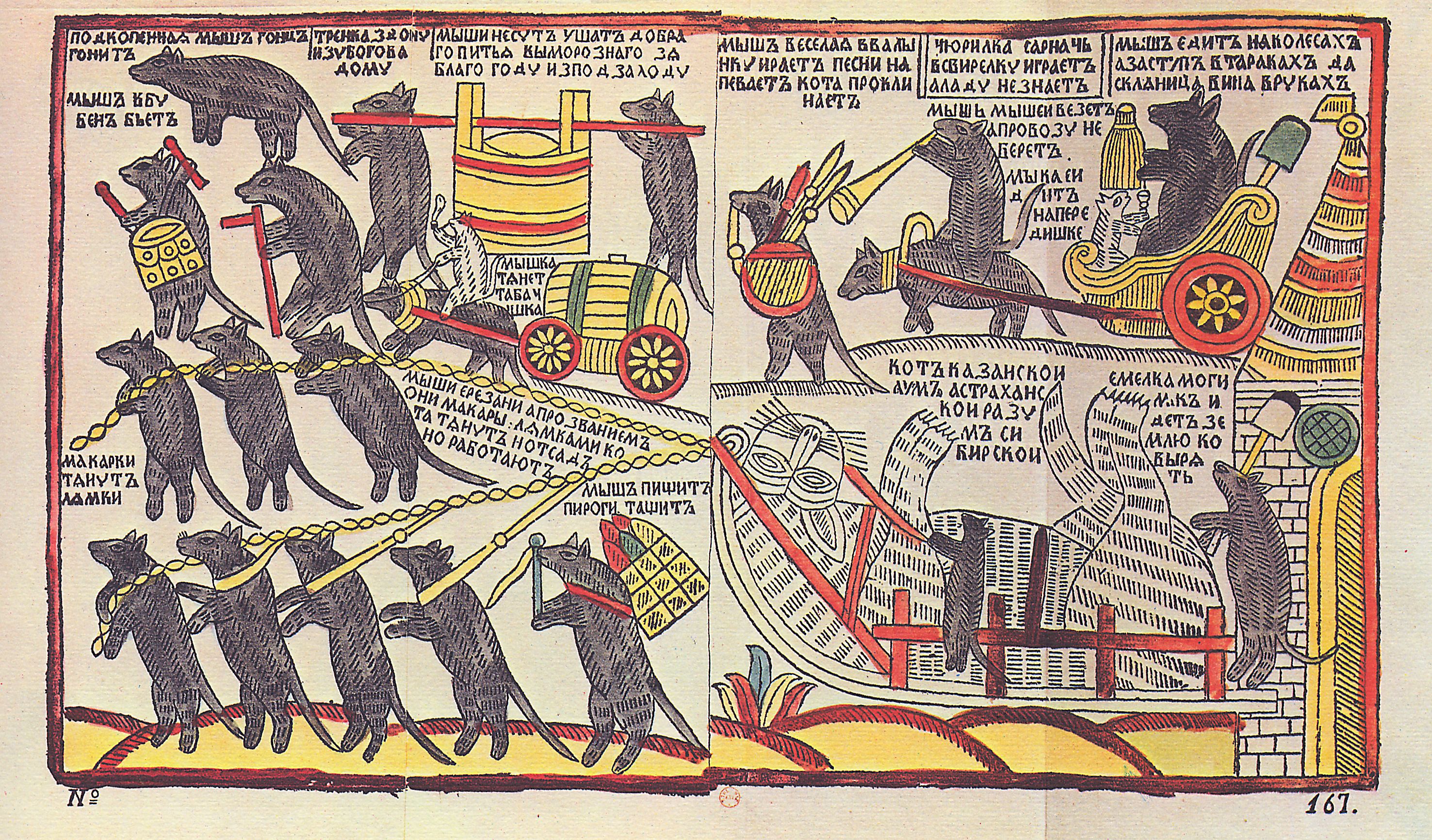
P.S.  It was not only monks who had grudges against cats.  If, instead of nibbling the vellum, the vermin had engaged in some art work of their own, they might very well have come up with something along the lines of this 18th century Russian print -


(image from wikipedia)

I'll not be showing this to my cat.  She's a sensitive soul.

January: a Whistle Stop Tour - Joan Lennon

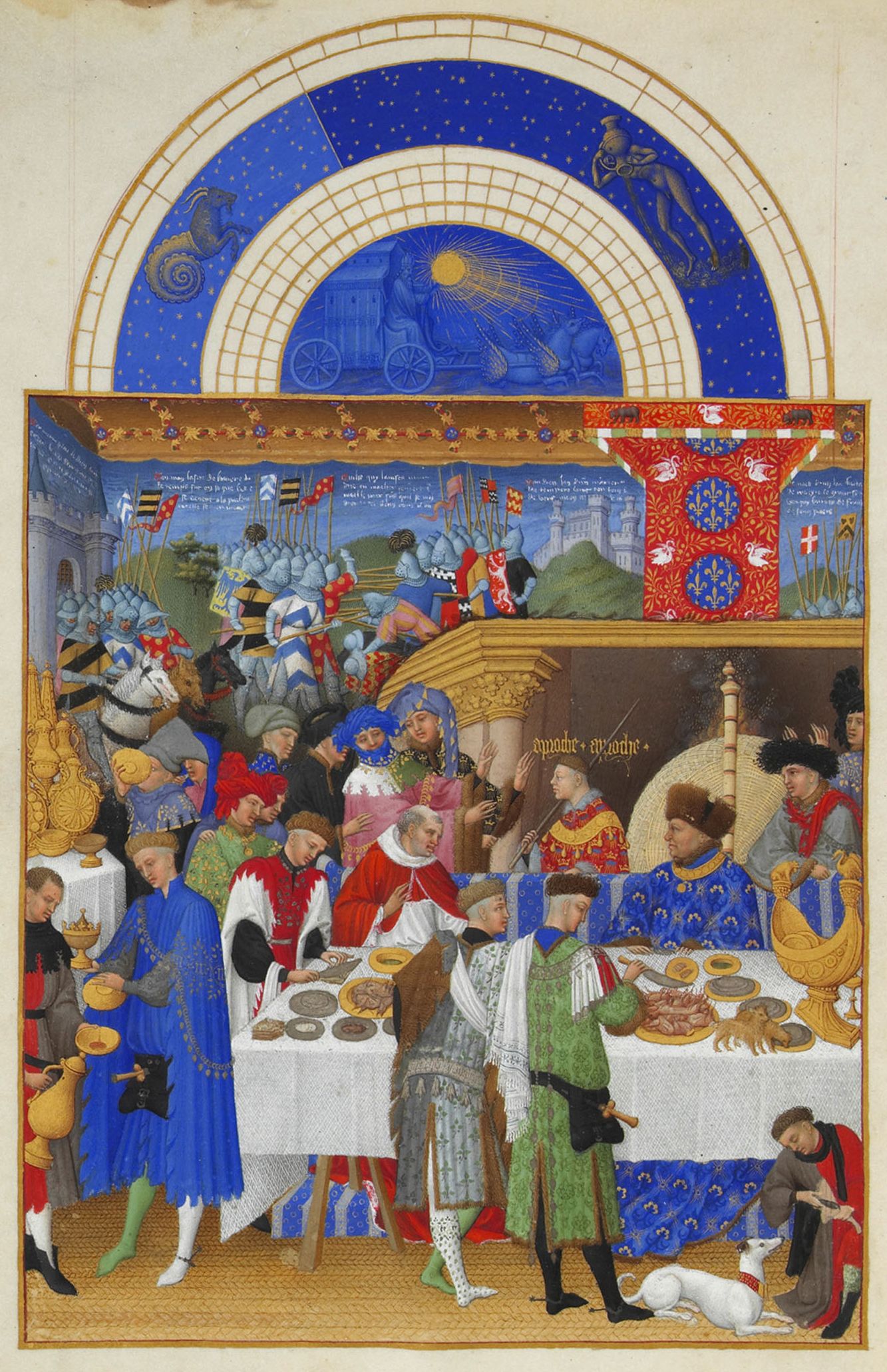
It's January, when many of us heave a sigh of relief that the (relentlessly) festive season has passed again, more or less successfully, and we can subside, stroll or leap (depending on mood) back into the arms of whatever it was we've had to set aside.  But, while waiting for the coffee to brew, spare a moment for the month herself, and how artists have been seeing her down the years ...


January from Les Tres Riches Heures of the Duc de Berry 
(between  and 

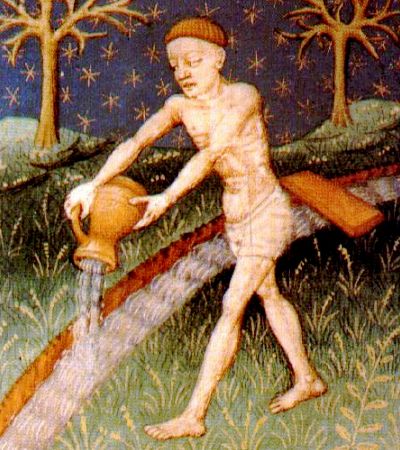
Aquarius in his pants 
(from a medieval book of astrology)

                 Woodcut illustration of Aquarius by Johannes Regiomontanus, 1512. 
                              (clothed.  So much more comfortable.)


Skating 
(early 1820s)


January by Grant Wood 1940 
(painter of American Gothic and a complete surprise to me!)

There, the coffee's ready.  Off you go now.


P.S. I also learned the following:

January starts on the same day of the week as October in common years, and starts on the same day of the week as April and July in leap years. In a common year, January ends on the same day of the week as February and October in a common year, and ends on the same day of the week as July in a leap year. In all years, January begins and ends on the same day of the week as May of the previous year. (Wikipedia)

I find this interesting, not in itself, but in the fact that someone thought someone else out there might actually want to know.  Dear geeks, we love you all.


Joan Lennon's website.
Joan Lennon's blog.

Hats On for St Catherine - Joan Lennon

Today is the Day of St Catherine - patron saint of unmarried women.  (Well, one of them.  There's also St Andrew, St Agatha, and a disconcertingly large number of others.)  I've always envied Roman Catholics all their saints for odd things.*  And I love the way something as ghastly as martyrdom can morph over the years into, for example, a day of wearing outrageous hats and celebrating the notion that a woman needs a man like a fish needs a bicycle.  

It didn't start that way, of course.  According to good old Wikipedia:

The French say that before a girl reaches 25, she prays: "Donnez-moi, Seigneur, un mari de bon lieu! Qu'il soit doux, opulent, libéral et agréable!" (Lord, give me a well-situated husband. Let him be gentle, rich, generous, and pleasant!") After 25, she prays: "Seigneur, un qui soit supportable, ou qui, parmi le monde, au moins puisse passer!" (Lord, one who's bearable, or who can at least pass as bearable in the world!") And when she's pushing 30: "Un tel qu'il te plaira Seigneur, je m'en contente!" ("Send whatever you want, Lord; I'll take it!"). An English version goes, St Catherine, St Catherine, O lend me thine aid, And grant that I never may die an old maid. 

And there was certainly a side to the St Catherine's Day festivities that was aimed at humiliating unsuccessful (i.e. unmarried) women - just look at that mocking gargoyle face peeping round the corner below!  


(Two Catherinettes in Paris in 1909)

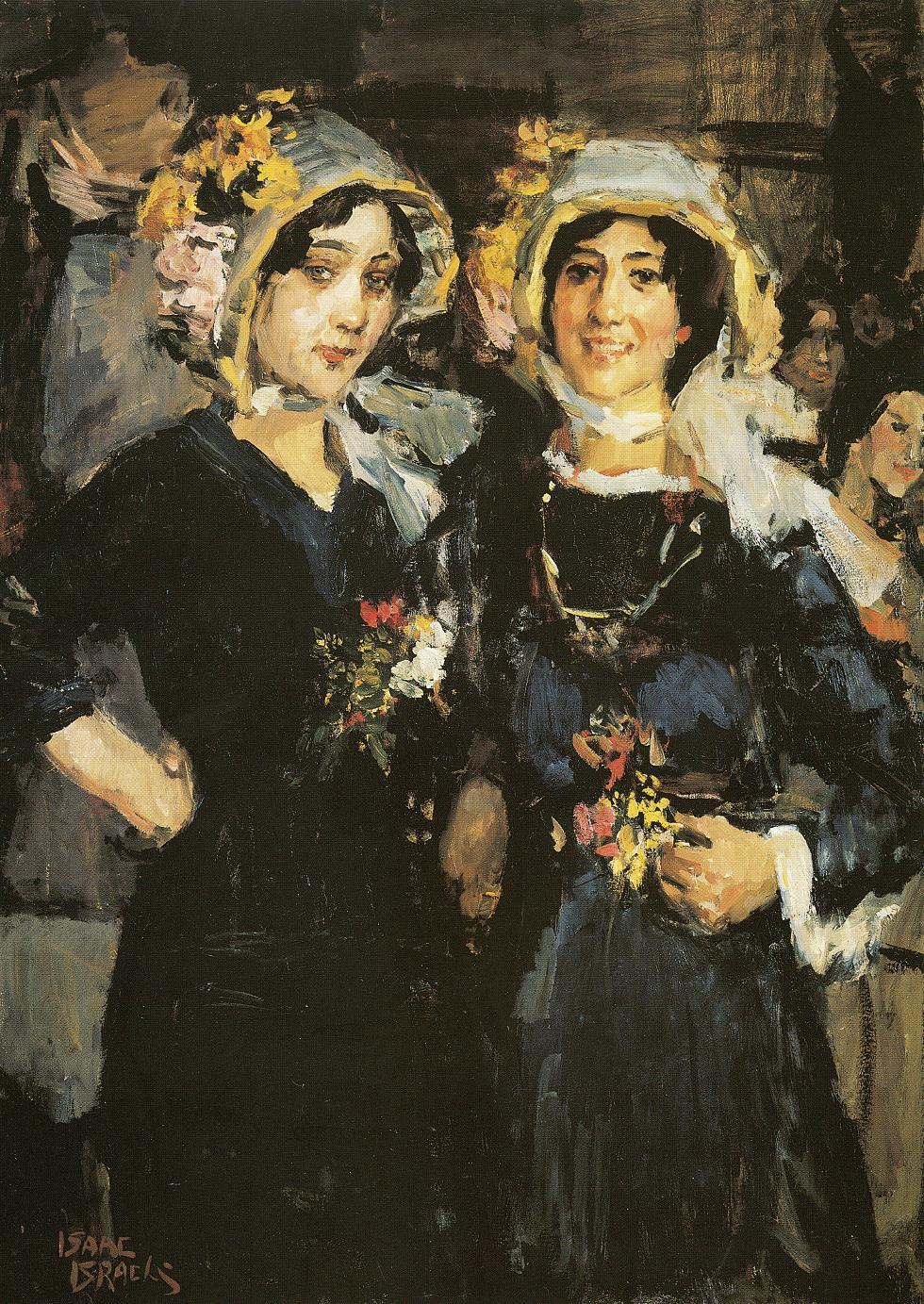
But then look into the faces of the Catherinettes themselves and see the confidence.  The strength.  The sisterhood. 


(A bevy more in 1932)


(Henri Matisse drew this sketch of a Catherinette in 1946.)


(And here are Issaac Israel's confident beauties)

I look at these images and I see subversion!


If I'd known about it, I would have loved being a Catherinette, tromping about the place in a crazy hat and enjoying being taken out to lunch and given flowers and drinks all day.  Sisterhood, solidarity, and silly hats.  St Catherine, I salute you!


*  To read more History Girl posts on saints look here.  My favourite so far is still St Neot, patron saint of fish.  With or without a bicycle. 


Joan's website.
Joan's blog.

(Thank you to On this day in fashion, Blackriders  and Wiki commons for these images.) 

China and My Mum - A Story in Pictures - Joan Lennon

Jean Alaithia Lennon was born in 1921 on Mount Emei (one of the four Holy Mountains) in Sichuan Province, China.  By the time she was three, her father (a medical missionary) had died of typhus and malaria.  There was unrest in the province and it was not considered safe for her or her mother or baby brother to remain. They were taken down the Yangtse on an American gunboat, back to Canada.  They didn't return.
Those are the bones of the story, but I have very little flesh to lay over them.  My mum didn't remember that time at all, and her mother was my ghastly grandmother (to distinguish her from my lovely grandmother) who didn't talk about it, or at least not about my mother's part in it, which was the part I always wanted to know.

And yet, and yet ...  Look at the photos.  Hints of the story are there.  You can see the seeds of the woman in that little girl.  And that fierce finger in the last photo as my mum is poised to run.  An entire relationship in a single gesture.


Joan's website.
Joan's blog.